Study Buddies:
Rebrand & Case Study
Product, UX Research, UX Design
Project Overview
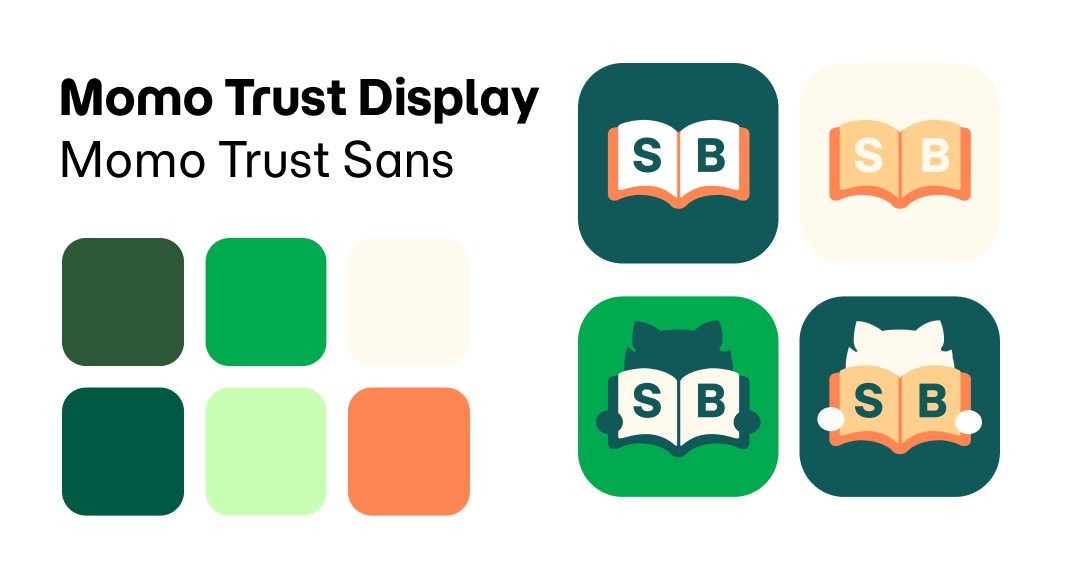
During my time as a UX Designer in Binghamton's Tech Collective, I was given the opportunity to lead a team in building and designing an application to help bring students together in an academic setting. In my time at Binghamton University, I've noticed that students (including myself) tend to struggle finding field-related connections. Whether it be peers, faculty, or tutors, it can be difficult to reach out to the appropriate aid—especially without a consistent platform to do so. We are currently doing a redesign of our previous prototype made in 2024.
My Role: Lead UX Designer
Team: 5 UX Designers, 5 Software Engineers, 1 Product Manager
Timeline: May 2024-Present
Deliverables: High Fidelity Designs, User Research
Problem Statement:
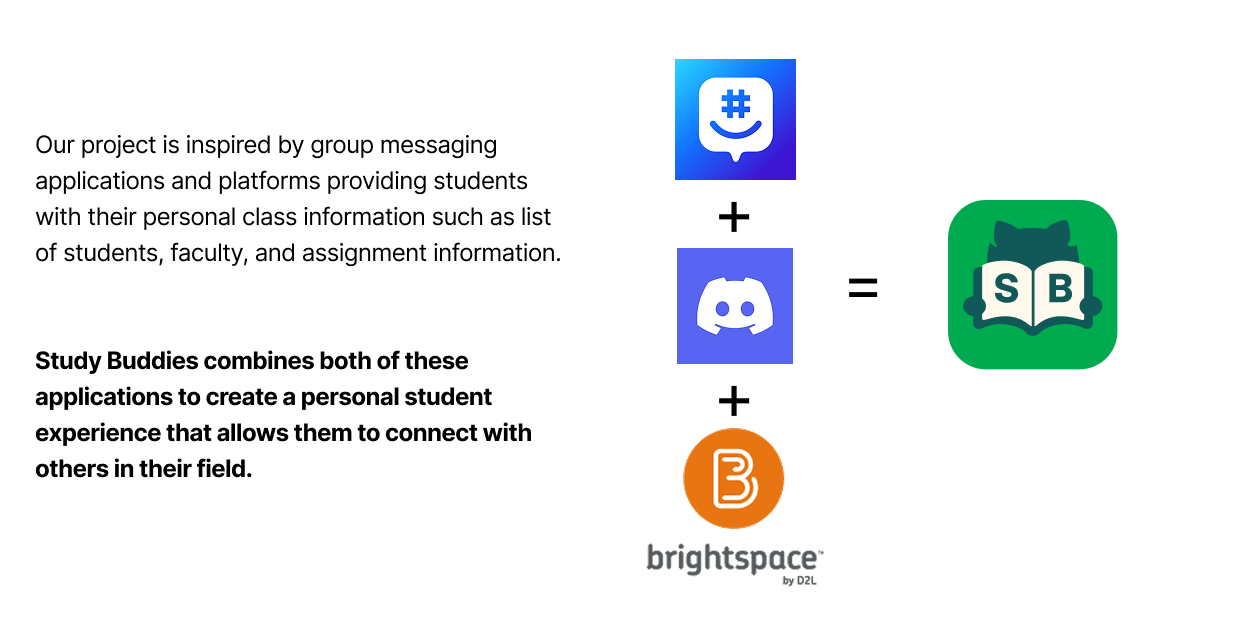
Students at Binghamton University struggle to find centralized academic collaboration opportunities. Existing tools are fragmented, making it difficult to connect with peers, form study groups, or coordinate projects on a single platform. All these features must take into consideration what the SWE team is able to implement and improve our previous iteration.
Our Design Process:
Analyze → Empathize → Research → Ideate → Design → Develop → Launch → Iterate
Analyze: What can we fix in our first iteration?
Our initial prototype was more conceptual and did not take into consideration what could be executed on the programming end due to a lack of communication between teams. In addition, we want our second iteration to be more student and course-focused rather than a generalized academic social media platform. Our first iteration prototype:
Empathize and Research: Understanding more of our target demographic
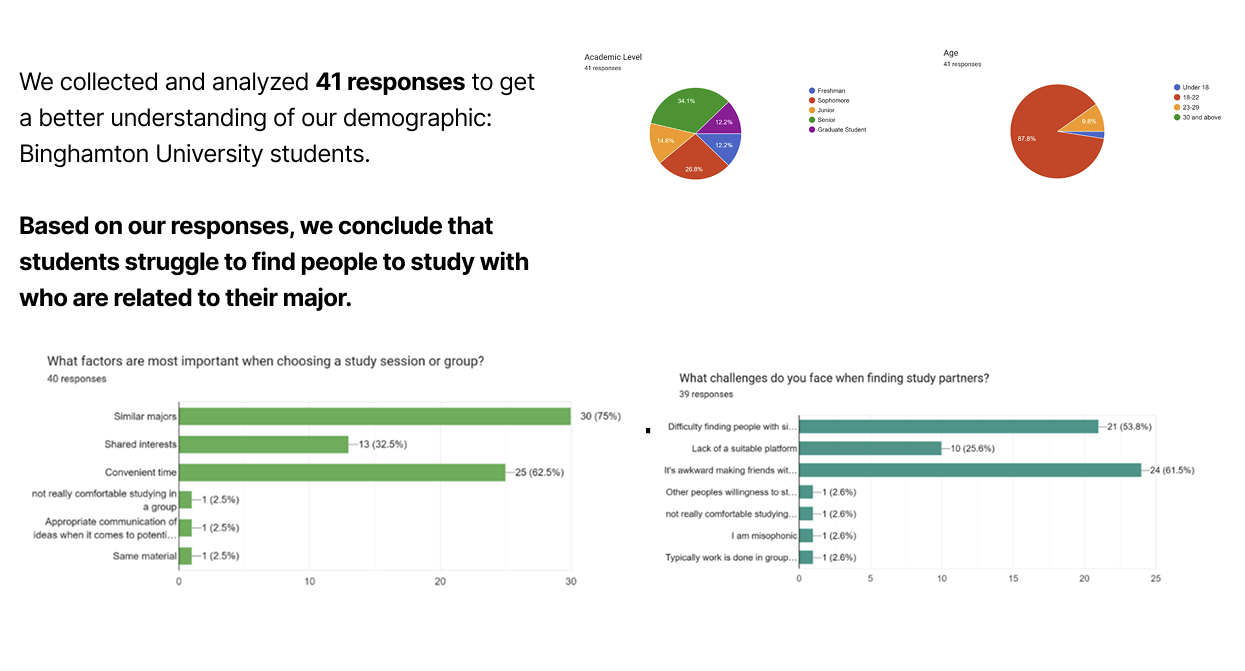
We referenced our surveys and the additonal interviews we conducted to assess and formulate our solution.
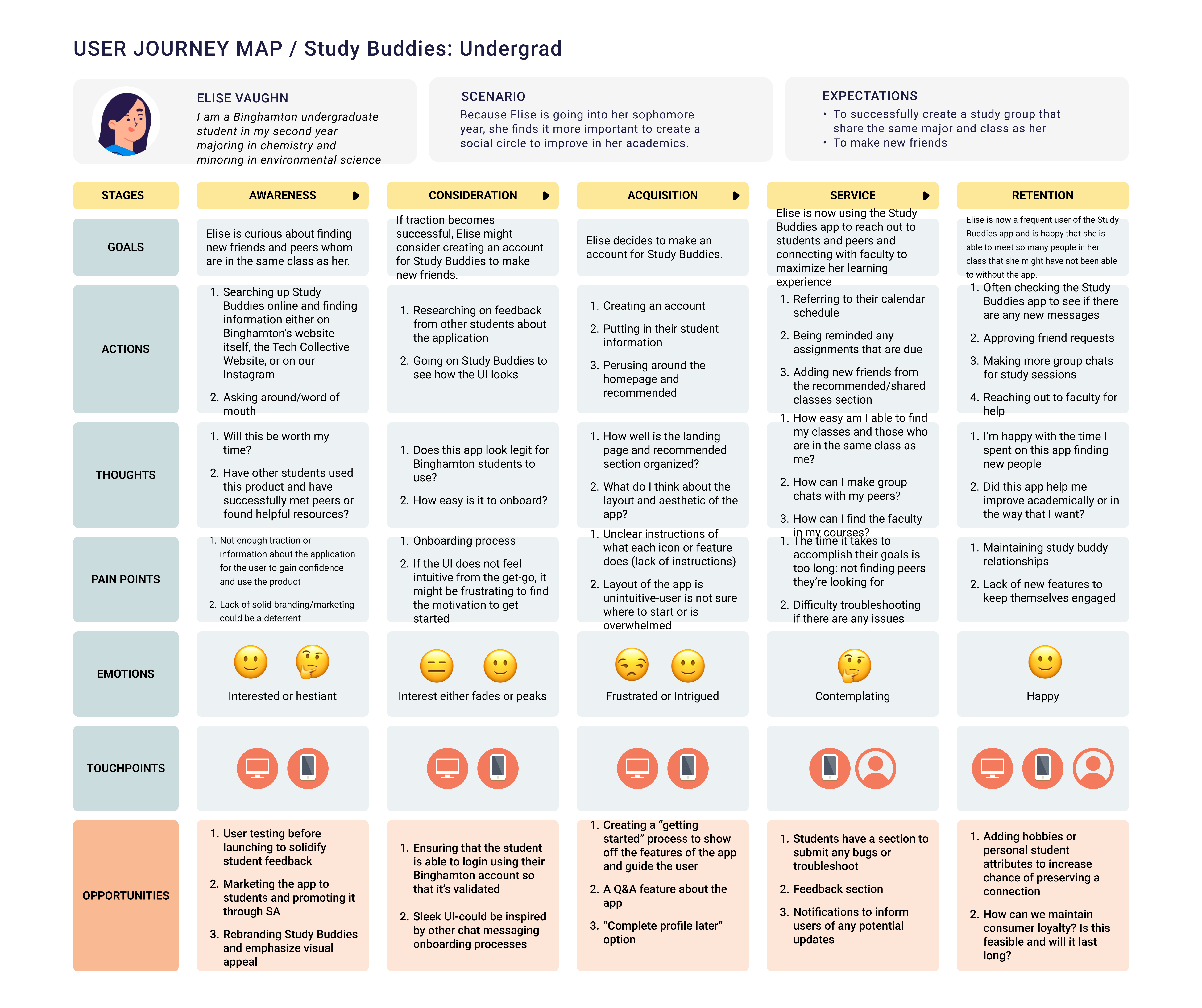
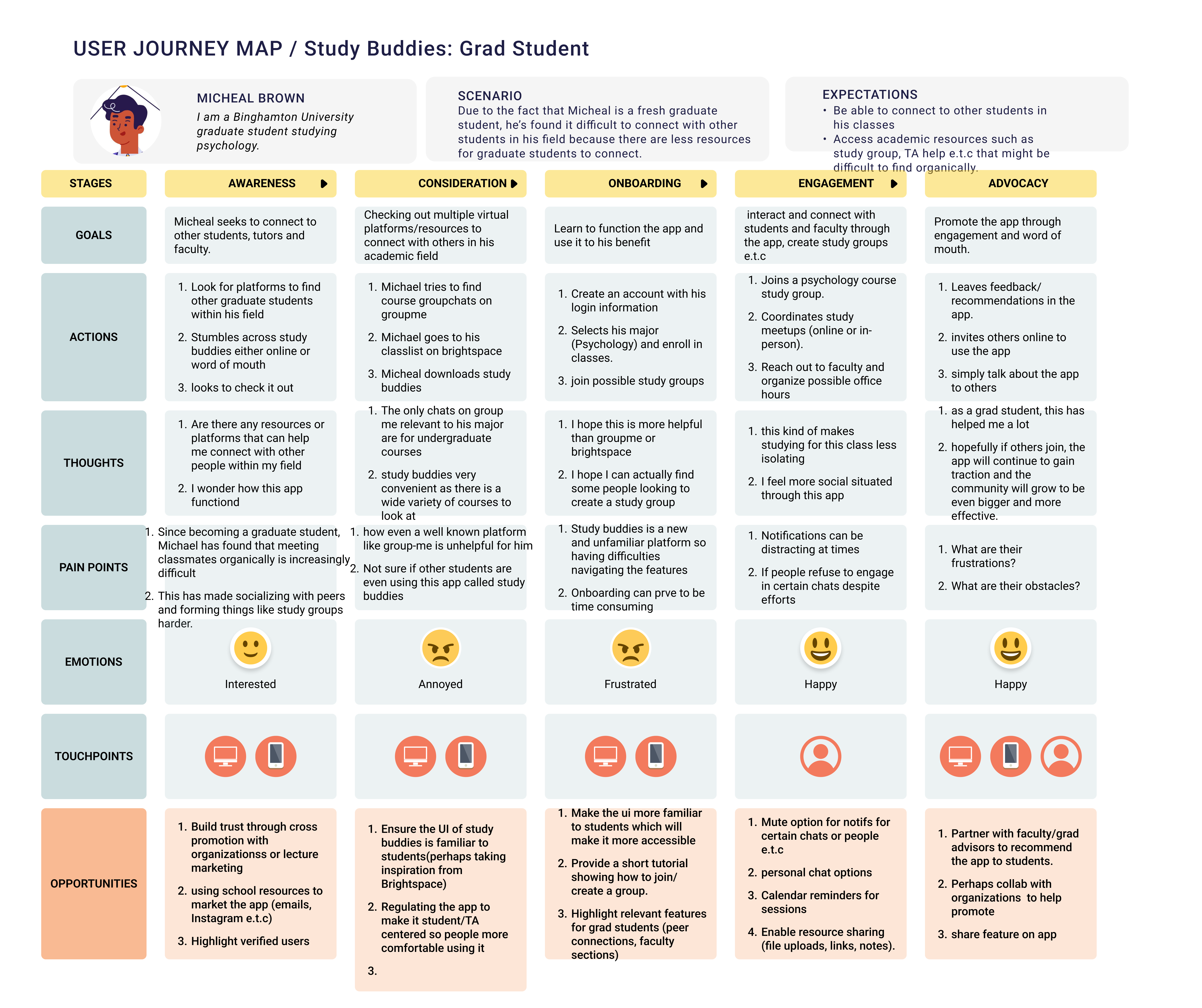
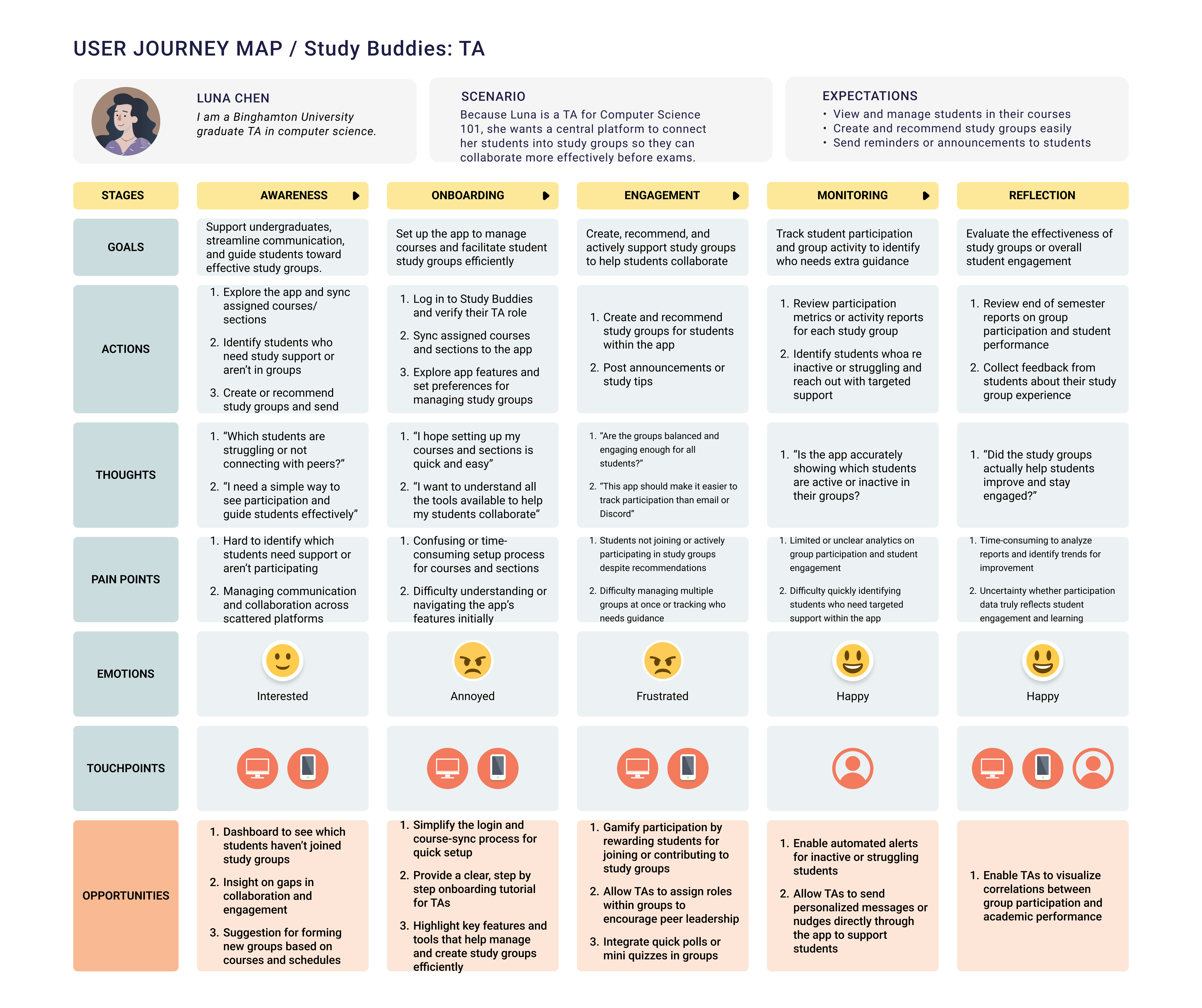
Ideate: Creating User Personas
Our users range from faculty to undergrad and grad students
Design: Wireframing and prototyping an updated solution
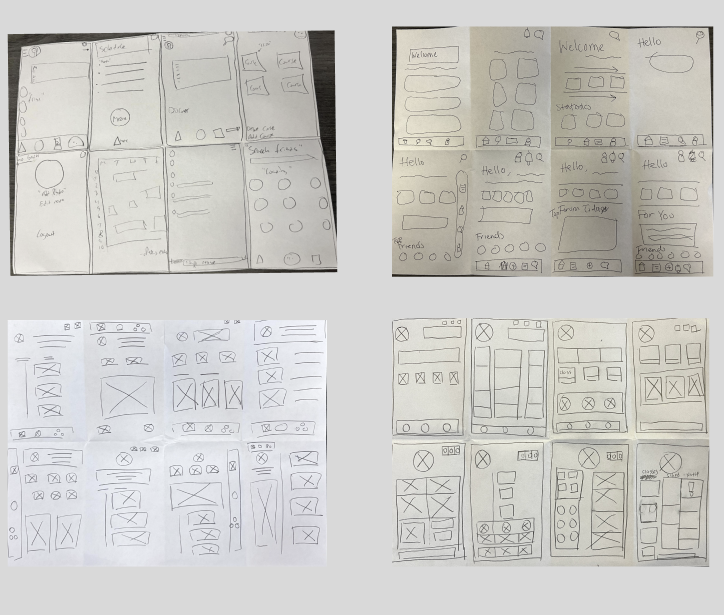
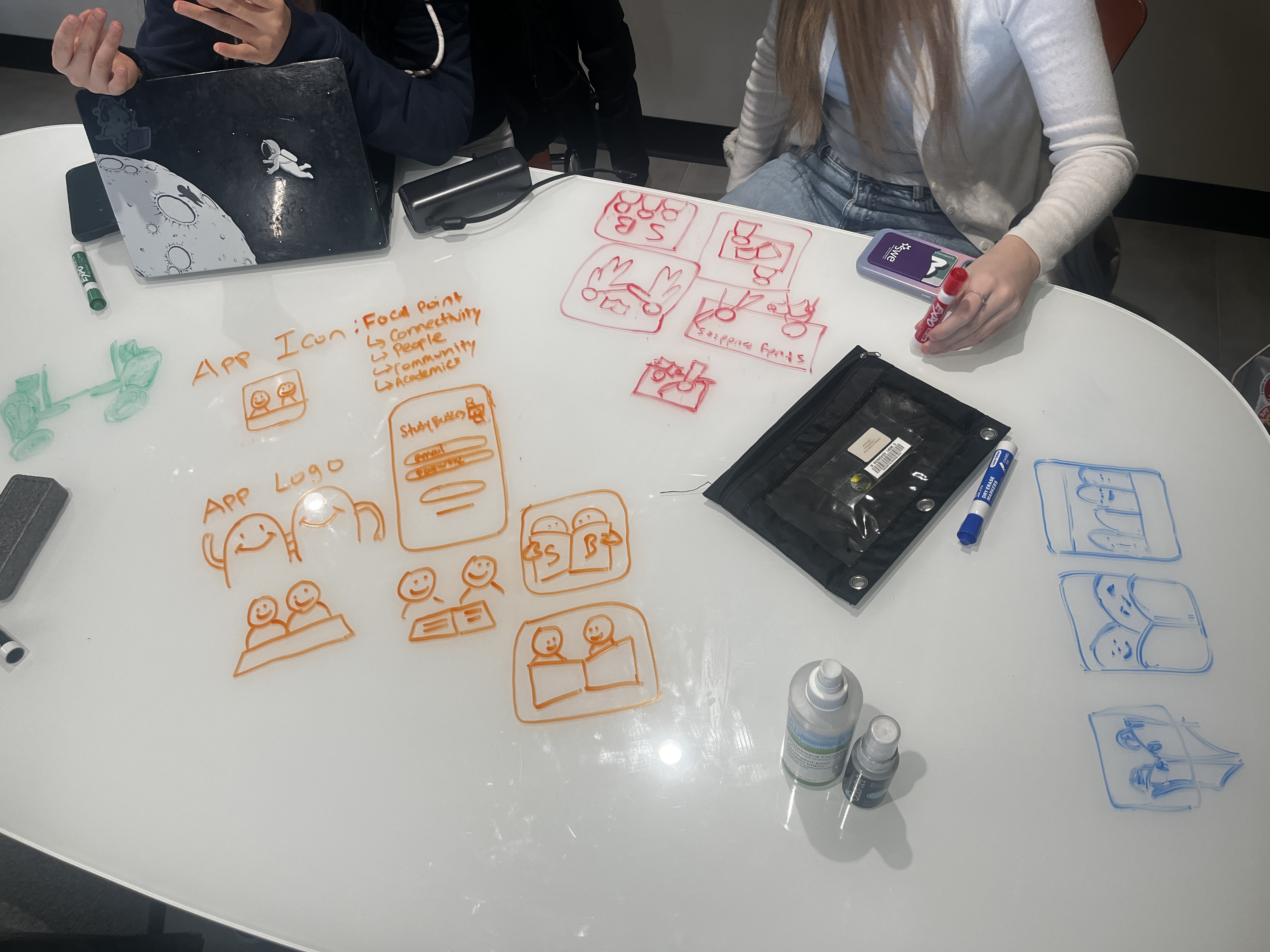
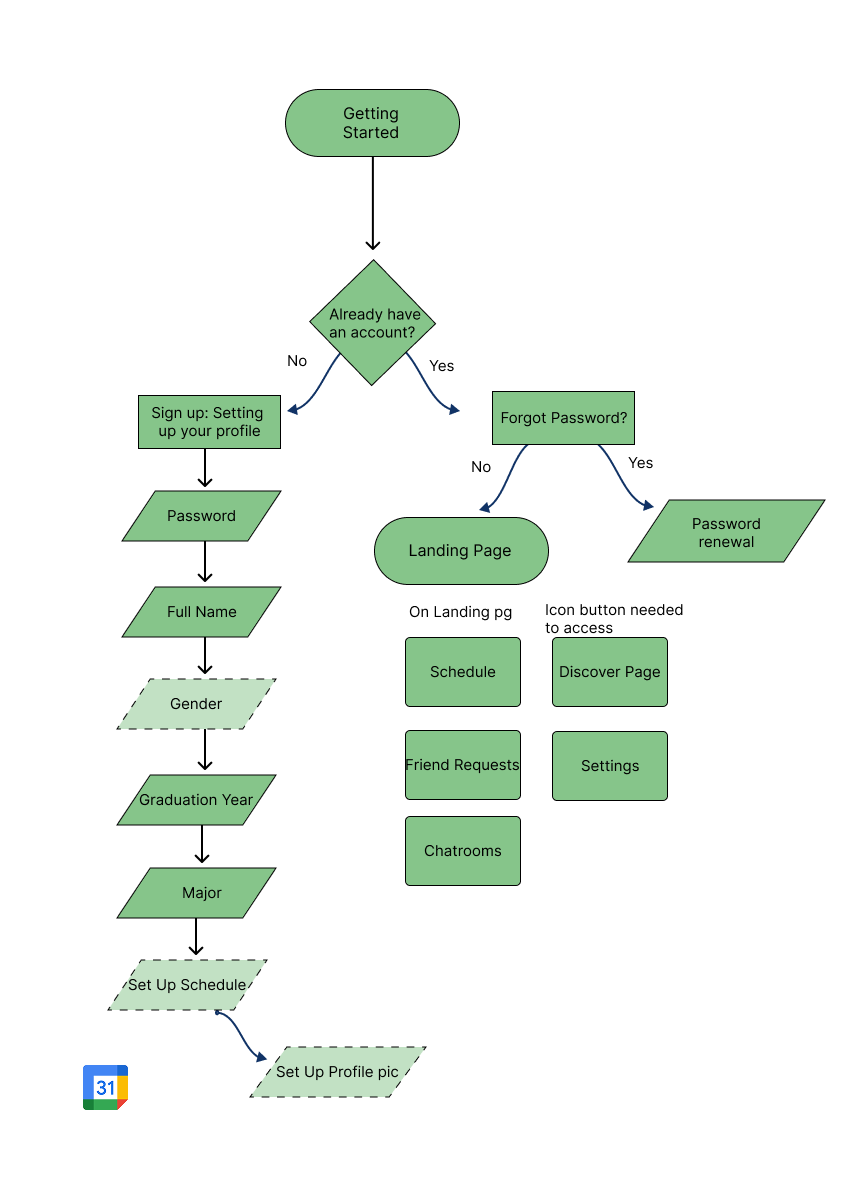
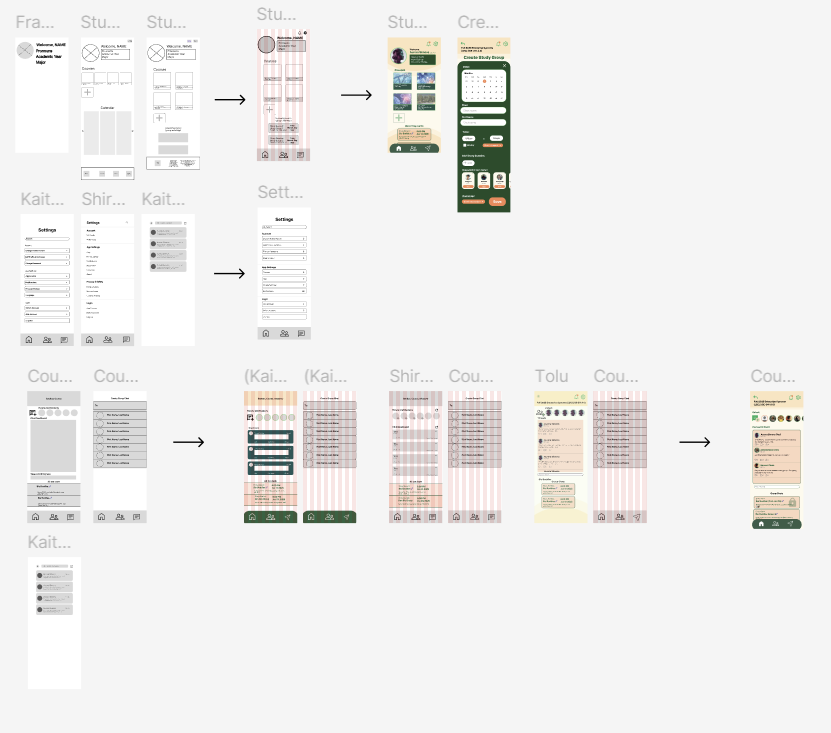
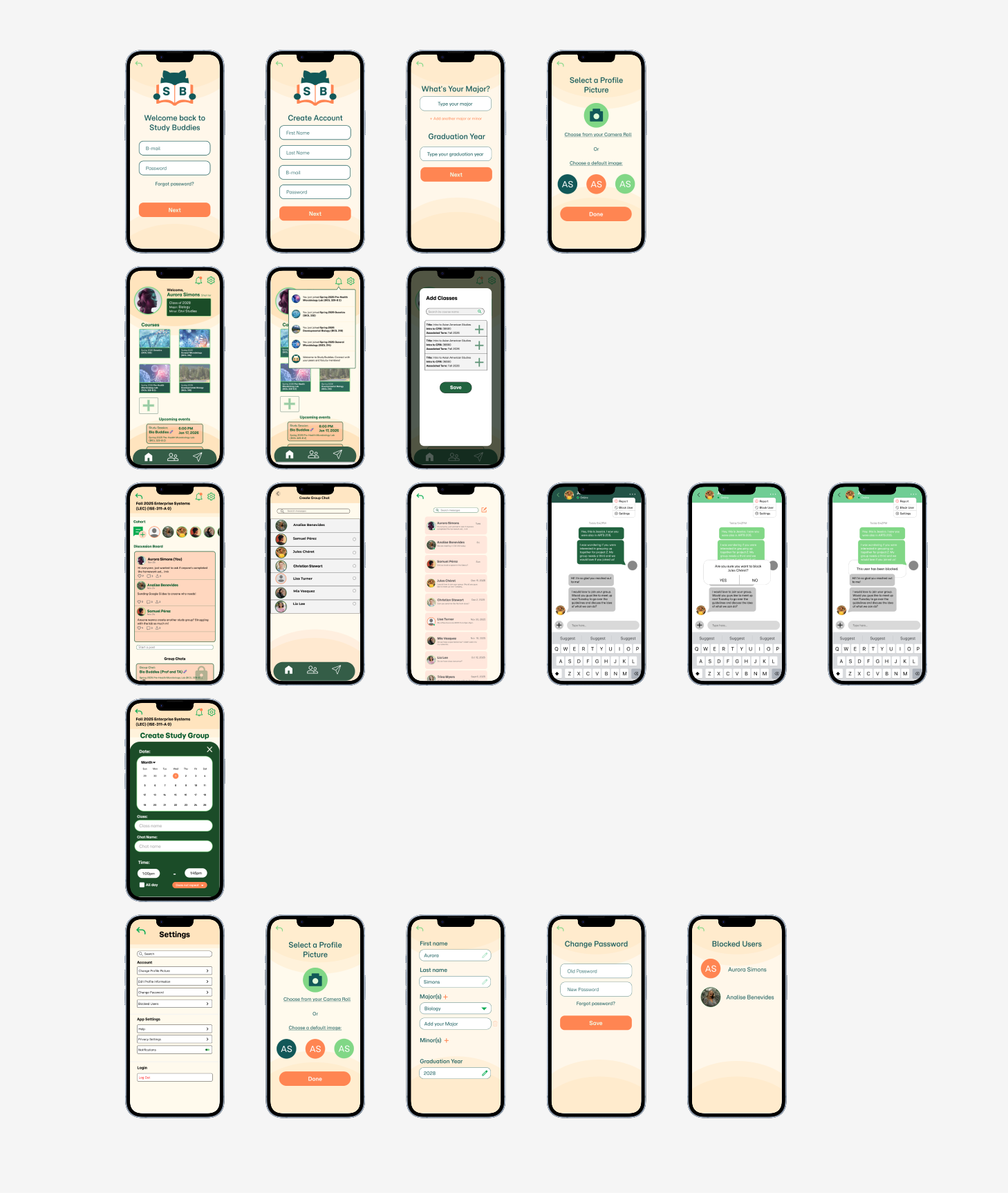
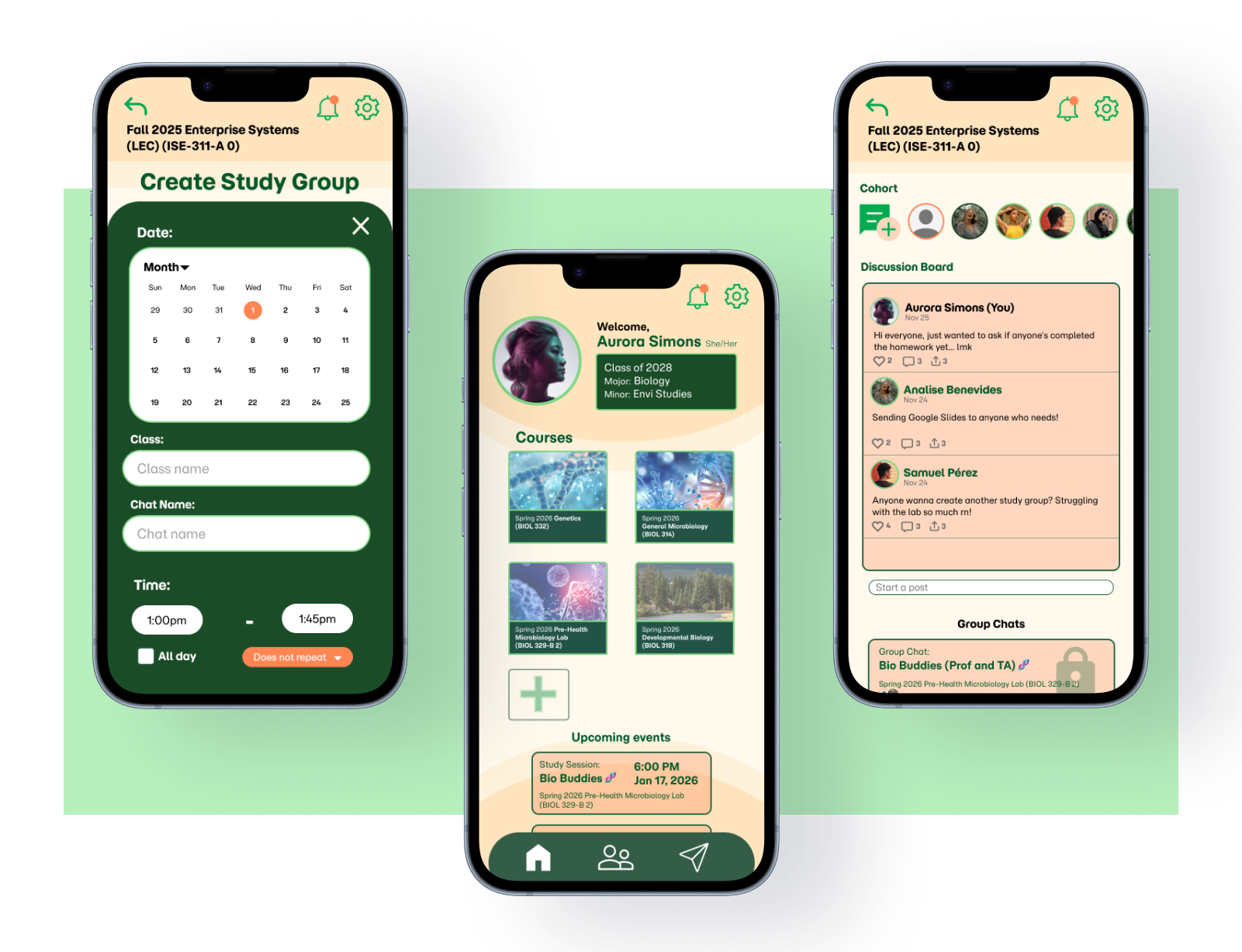
Our app will offer three main features: A course dashboard with a list of faculty and students, and main classroom chat, the option to create study groups, and direct messages. Using the crazy 8's exercise and teaching my team how to use Figma, we are able to create pages for the confirmed features by the SWE team.
Insight, Outcome, and Final Product:
Even though this project is still a work in progress, my team and I are able to effectively practice cross-functional collaboration and adapt and strengthen our design skills given our circumstances, understand how we can circumnavigate our limitations, and come to a consensus among both designing and programming teams on what we can implement.
This case study will be continuously updating.
Thank you for making it to the end of this case study!